

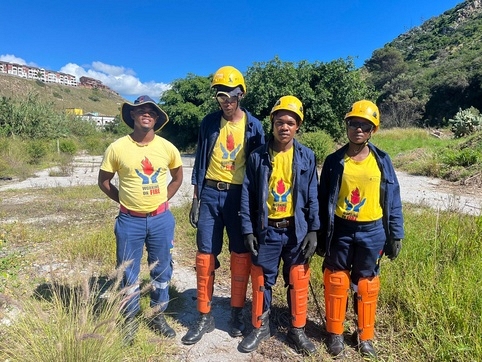
The Baakens Valley Business Cluster, one of eleven geographic clusters operating under the banner of the Nelson Mandela Bay Business Chamber, has officially commenced Phase 1 of an ambitious alien vegetation clearing initiative in the Baakens Valley, marking a significant step towards restoring one of Nelson Mandela Bay’s most treasured natural assets.
This intervention speaks to a broader vision of reclaiming and revitalising the Valley as a safe, accessible and ecologically thriving space for all residents. Years of dense alien vegetation growth have not only obscured visibility within sections of the Valley, but have also contributed to rising safety concerns, including challenges linked to illegal occupation in heavily overgrown areas.
By systematically clearing invasive plant species, the initiative is already opening up the landscape - restoring sightlines, enhancing safety and re-establishing a sense of shared public space.
Beyond these immediate benefits, the project delivers critical environmental gains. The Baakens River system, long burdened by blockages caused by invasive growth, will see improved flow as clearing progresses. This is expected to significantly strengthen flood mitigation efforts while enhancing stormwater management across the Valley.
Equally important is the ecological restoration underway. The Valley has been heavily infested with invasive species such as Spanish reed and Brazilian pepper trees, both of which have disrupted natural biodiversity and placed strain on the surrounding ecosystem. Their removal will allow indigenous vegetation to regenerate, restoring balance and supporting the return of local flora and fauna.
The clearing operation is being undertaken by the Working on Fire (WoF) team based in Van Stadens - a leading, government-supported environmental management programme renowned for its expertise in fire management, invasive species control and ecological rehabilitation. The 12-member team currently deployed brings specialised skills in species identification and environmentally responsible clearing methods, ensuring that the work is conducted to the highest standards with minimal ecological disturbance.
Having commenced operations earlier this week, Phase 1 is expected to be completed within two weeks, after which Phase 2 will build on this progress to extend the impact across additional sections of the Valley.
Chief Executive Officer of the Nelson Mandela Bay Business Chamber, Denise van Huyssteen, emphasised the broader significance of the initiative, noting: “The Baakens Valley is one of Nelson Mandela Bay’s most valuable natural and economic assets, and its restoration is critical not only from an environmental perspective, but also in terms of urban safety, investment confidence and quality of life. Initiatives such as this demonstrate the tangible impact that coordinated business-led action can have in shaping a more resilient and liveable city.”
She further highlighted the role of the Chamber’s cluster model in driving meaningful change: “The Baakens Valley Geographic Cluster is one of eleven clusters under the Chamber where businesses collaborate together on a voluntary basis to pursue initiatives which improve their surrounding operating environment. This initiative is a powerful example of how localised partnerships can deliver practical, on-the-ground solutions that benefit both communities and the broader economy. We greatly appreciate the efforts of all the participants in the Cluster who are making are difference in preserving a critical natural asset of the Bay.”
Van Huyssteen added that environmental rehabilitation must be viewed as an investment in the city’s future: “Clearing invasive species and restoring natural ecosystems is not simply about conservation, it is about unlocking the full potential of spaces like the Baakens Valley as safe, accessible and attractive environments for residents, visitors and investors alike. It reinforces Nelson Mandela Bay’s positioning as a destination that values sustainability, resilience and inclusive growth.”
She concluded by underscoring the importance of sustained, collective effort: “What we are seeing in the Baakens Valley is the result of strong partnerships and a shared commitment to action. Maintaining this momentum will be key to ensuring long-term impact, and we encourage continued collaboration across all stakeholders to safeguard and enhance this vital natural corridor.”
This initiative is more than a clearing exercise - it is a powerful demonstration of collaborative environmental stewardship. It reflects a commitment to safeguarding natural heritage, enhancing urban resilience, and creating a safer, more inclusive space for communities to reconnect with nature.
As the Baakens Valley begins to open up once again, it stands as a symbol of what can be achieved through focused intervention, partnerships and a shared commitment to sustainable urban environments.
#ResurgeTheBay #BayOfOpportunity