

The people who live, work and do business in Nelson Mandela Bay have struggled with the impacts of unstable municipal leadership for more than a decade.
There is no lack of diagnosis as to the reasons, and we all experience the symptoms daily.
On the verge of the 4 November local government elections, arguably the most critical in South Africa’s democratic era to date, we know that change is urgent – and that it is going to take much more than a shuffling of seats or parties.
A different approach is needed to achieve the municipal stability, both at political and leadership level, that forms the foundation of economic and social stability.
More workshops, summits and hiring consultants to write economic strategy development plans and deliver awareness campaigns are not the answer.
Manufacturing, with its surrounding eco-system of value and supply chains, is the key economic driver and job creator in the Bay, supported by tourism, agriculture and agro-processing that link into the broader regional economy.
Failures of municipal services and infrastructure disrupt production, increase the overall costs of doing business in the metro and impact negatively on investor confidence and economic devevelopment, while depriving the communities most in need of both municipal services and the supplementary corporate social responsibility initiatives funded by business.
The current decline in manufacturing and tourism, with associated job losses, ripples into related businesses, and the households dependent on that employment.
Municipal revenue from businesses and residents decreases, in turn affecting the metro’s ability to deliver the services that businesses and residents depend on- thus propagating the death spiral.
Municipal failure is thus a critical socio-economic risk, creating a mutually-reinforcing downward spiral which needs to be reversed so that municipal recovery protects and strengthens local jobs, social and economic resilience, and the metro’s income streams.
The reality is that the problems cannot be fixed by government alone, given the overall declining financial position of the municipality, the spiralling losses in electricity and water services, the lack of maintenance of infrastructure, general shortcomings of service delivery, and the ongoing instability in the administration of the municipality. Yes, it is what they should be doing, but to date this approach has not worked.
A paradigm shift is required, a “whole of society” approach.
That is the basis of the Rebuild Plan developed by the NMB Civil Society Coalition, a broad, non-partisan grouping that includes civic and non-governmental organisations representing diverse areas and interests, faith communities, traditional leaders, organised labour and organised business, united around willingness to act for the betterment of Nelson Mandela Bay and its people.
The NMB Business Chamber is an active participant in the Civil Society Coalition and in drawing up the Rebuild Plan, which argues that recovery is possible with a partnership approach aligned behind a disciplined implementation programme.
The plan is built on collaboration across government, business, civil society and communities; with practical action steps phased over 18 months, monthly progress review and oversight built-in, with the aim to restore governance, institutional functionality, financial discipline, service delivery, and confidence in the municipality.
Importantly, the plan is not aligned to any political faction or constituency, and no paid consultants were involved in drawing it up – it is the closest one can come to saying it is “by the people, for the people, of Nelson Mandela Bay”.
Representing a practical contribution from business and civil society to municipal recovery, the plan is designed to support the municipality and help ensure it succeeds, not to replace it.
The core principle is that government must lead, but recovery requires social partnership, the support of external expertise, and transparent monitoring.
The value of this civil society contribution is that it is not just another abstract strategy, but offers a practical, prioritised and monitorable plan explicitly focused on implementation, accountability and visible delivery – with multi-stakeholder support.
It must be said that the current state of the municipality is the result of an accumulation of failures over multiple political administrations, not of any single party or coalition, and that the metro should not be viewed only through the lens of failure.
There are capable and committed politicians and officials whose knowledge, experience and commitment are vital assets for recovery. Along with the internal structures that do work, their strengths and capabilities will be vital to the success of the Rebuild Plan.
The recent Cabinet approval of the White Paper on Local Government is a welcome step, clearing the way for the Department of Cooperative Governance and Traditional Affairs (Cogta) to begin implementing reforms aimed at strengthening governance, performance management and accountability, ensuring clearer separation of political and management roles, and reducing political interference in administration.
Cogta Minister Velenkosini Hlabisa has said the white paper will be “implemented immediately” after the 4 November local government elections.
The Civil Society Coalition Rebuild Plan offers the new NMB Council a fast-track opportunity in an immediately implementable, results-oriented action plan aligned to the white paper reforms that already has the buy-in of its stakeholders, who stand ready to help implement it.
(Read the full Rebuild Plan at https://nmbcsc.org.za/wp-content/uploads/2026/09/Updated-Rebuild-Plan-Summary-30-August-2026.pdf)
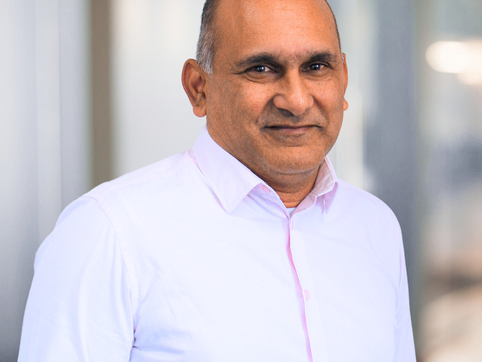
Kelvin Naidoo is the President of the Nelson Mandela Bay Business Chamber.