The Nelson Mandela Bay Business Chamber has advocated for a state of emergency declaration to be made to protect South Africa’s infrastructure against large-scale vandalism, which is costing the economy millions of Rands and is putting ongoing investment and jobs at risk.
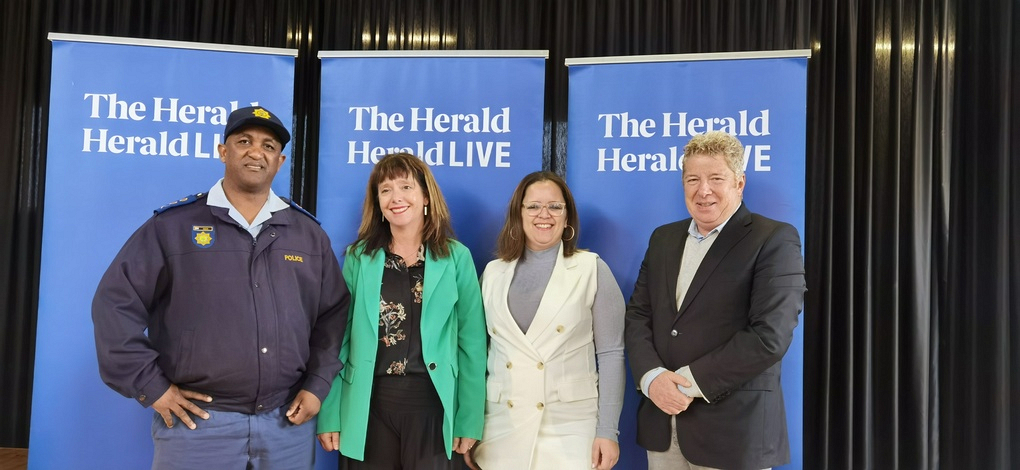
Chamber CEO Denise van Huyssteen revealed this during an Anti-Vandalism dialogue hosted by The Herald at Mendi Arts Centre, in New Brighton, which sought to answer the question of how the Metro can work together to protect its infrastructure and improve service delivery.
Forming part of the panel was Sicelo Duze, a community leader and CEO of Algoa Bus, Vuyiseka Ncata, the Major General of the South African Police Service and Councillor Bongani Mani, who is a Mayoral Committee Member for Corporate Services.
Delivering her keynote address, Van Huyssteen said: “Since the arrival of coalition politics to the Metro in 2016, the ongoing political instability has directly impacted upon the ability of the Municipality to deliver basic services. Sadly, one just needs to look around the city to see the state of decay. Traffic lights are not working, broken kerbs, blocked drains, litter, derelict buildings and so on. The water crisis has been the most visible manifestation of this dysfunctionality, with over 29% of water lost due to leaks and a further 11% unaccounted for.
“Compound this with the past two years plus Covid where there has been a complete breakdown in law and order. This has provided a vacuum for lawlessness and criminal activity to thrive to such an extent that the vandalism of infrastructure in our Metro is now out of control.”
She further highlighted the extent of vandalism and crime in some industrial areas, labelling it “an economic sabotage” of the country’s critical infrastructure. Next to economic collapse, the lack of streetlights has rendered most neighbourhoods extremely unsafe and easy targets for an incentivised group of criminals acting with impunity.
Equally concerning is cable theft which is costing the Metro’s economy millions of Rands due to business operations being disrupted. “Manufacturers in one of our industrial areas experienced nine power outages alone last year due to this issue. In fact, one manufacturer could not produce products for 12 days and due to this, could not export orders nor pay their workers.”
Furthermore, sub-station infrastructure and water pump stations have also been targeted by criminals. While the Metro has been flagged as the country’s number one spot for the vandalism of cellphone networks and in particular, of copper cables and batteries.
“Business cannot operate under these circumstances. We need the basics such as water, electricity, roads and safety, and security to be in place. The city risks losing investment and jobs if these issues are not addressed urgently,” said Van Huyssteen.
As part of its interventionist approach, the Chamber, in partnership with the Municipality, has rolled out an Adopt A Substation initiative which enables member companies to extend their own security to the sub-stations in their areas of operation. To date, 17 substations have been adopted, with more in the pipeline to be secured.
Additionally, the Chamber has a Safety and Security Task Team, which is engaging with various stakeholders to find solutions to the escalating level of crime impacting upon business. The organisation has also started establishing geographical clusters, particularly in the industrial areas to enable businesses to pool their resources to address issues of common interest.
“The current legislation must and regulations need strong and effective law enforcement, a stronger drive to prosecute the crimes, and maximum penalties implemented to act as a deterrent to criminal behaviour,” concluded Van Huyssteen.