

The Revised Budget Version 3.0, presented by Finance Minister Enoch Godongwana on 21 May 2025, arrives at a critical juncture for South Africa’s economy, framed by intensifying global uncertainty and enduring domestic structural weaknesses. While global trends such as rising economic protectionism through tariffs, geopolitical instability and declining productivity place pressure on even the most robust economies, South Africa’s relatively small and stagnant economy renders it especially vulnerable to these shocks. The country’s response, as reflected in this budget, must be rooted in realism, urgency and implementation of fiscal discipline.
Despite the absence of an increase in VAT, South Africans will still experience a real tax burden through bracket creep and the increase in the fuel levy. This is expected to push total tax collections to 28% of GDP, up from 27.5% - a clear indication of rising fiscal pressure on consumers and businesses. At the same time, government debt is projected to peak at 77.4% of GDP. Although this is not unprecedented globally, South Africa’s situation is particularly precarious because its economy is not growing. Without new and sustainable sources of income, the long-term viability of public spending, especially on much-needed infrastructure, is at risk. For an emerging economy like South Africa, high debt to GDP deters potential investments as investors may see the country as riskier, fearing possible debt distress, future tax hikes, and reduced government capacity to stimulate growth. For debt to be justified, it must be visibly translated into improved services, enhanced productivity and inclusive growth, benefits that South Africans must begin to see and feel.
The Nelson Mandela Bay Business Chamber acknowledges that while this is not strictly an austerity budget, the absence of fresh cash inflows means that the country is still in for a difficult economic period. Infrastructure development, which is both a driver of growth and a quick, if temporary, source of employment, will be slow in the absence of additional revenue. This not only delays economic momentum but also curtails short-term employment opportunities in a country where unemployment remains a deeply entrenched crisis.
The projected GDP growth of 1.4% is arguably optimistic, particularly in light of continuing global headwinds, including uncertainty in major economies such as the United States. Historically, South Africa’s growth projections in national budgets have struggled to materialise, and even the current target falls below population growth, which means the country is, in per capita terms, becoming poorer. This trend erodes disposable income and leaves little room for saving, contributing to an economic cycle marked by low demand and stagnating productivity.
The Chamber is particularly concerned about the underlying risks. Lower-than-expected GDP growth, compounded by weak productivity and rising global debt levels, creates a scenario where rising debt is not accompanied by the capacity to repay it. Globally and locally, productivity gains have slowed, while borrowing has continued - an unsustainable trend that cannot support long-term development. South Africa must therefore intensify its efforts to raise domestic productivity and reindustrialise its economy in order to expand its revenue base, grow employment and reduce dependency on debt financing.
In this context, the role of inflation targeting becomes even more important. The South African Reserve Bank is expected to revise its inflation target from a 3 - 6% range to a fixed target of 3%. While such a move may be beneficial in the long term by anchoring expectations and encouraging price stability, it may also result in higher interest rates for longer periods. In a country where savings are already low, because real incomes have fallen and disposable income has shrunk, this poses a real challenge. Interest rates are currently the only policy tool the Reserve Bank has at its disposal, but their effectiveness is limited in an environment where inflation is being driven more by supply-side constraints than excess demand. With inflation currently within the target range and close to 3%, this low level reflects subdued consumer activity, not a stable or growing economy.
To address inflation sustainably, South Africa must look beyond interest rate policy and towards supply side solutions. Exchange rate volatility, deindustrialisation, declining local production, and constrained logistics are contributing to structural inflation pressures. Encouraging local production, investing in industrial capacity, and addressing supply bottlenecks must be central to the country’s economic strategy going forward.
The Nelson Mandela Bay Business Chamber supports the positive aspects of the budget, particularly the continued infrastructure investment, reforms to public-private partnership regulations, and the increased funding to SARS, which may yield substantial returns. These are meaningful steps, but they require timely and effective implementation. South Africa can no longer afford to delay; municipalities must be capacitated, national departments must coordinate better, and the private sector must be integrated more deliberately into the country’s development agenda.
The Chamber urges government to act with the decisiveness and accountability that the economic moment demands. This is not just about fiscal balance sheets, it is about restoring confidence, unlocking growth and ensuring that the sacrifices being made today lay the groundwork for a more resilient, inclusive and competitive South African economy.
What is now required is a decisive shift from planning to implementation. Government must prioritise more effective tax collection, significantly improve the productivity of public entities, and eradicate wasteful expenditure. At the same time, it is essential to foster innovation and attract strategic investment to reignite economic growth and job creation.
A stable and enabling environment is essential for businesses to thrive. This means resolving infrastructure backlogs, addressing crime and corruption, improving logistics inefficiencies, ensuring the reliability of energy and water supply, and reducing the red tape that continues to stifle enterprise development and expansion. Implementation must be monitored rigorously across all levels of government to ensure that every rand spent delivers tangible value for citizens and businesses alike.
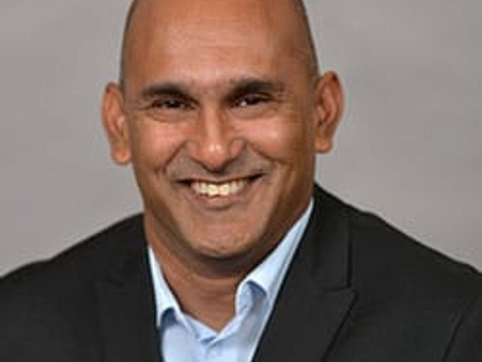
Kelvin Naidoo, Acting President of the Nelson Mandela Bay Business Chamber
#ResurgeTheBay #BayOfOpportunity