

The Nelson Mandela Bay Business Chamber has welcomed the 2026 Budget Speech delivered by Finance Minister Enoch Godongwana, describing it as a practical and reform-focused plan that brings cautious optimism for businesses in Nelson Mandela Bay.
This is a budget aimed at steadying the country’s finances while creating space for growth, something that matters directly to local businesses and residents. One of the most important announcements for small businesses is the increase in the VAT registration threshold from R1 million to R2.3 million in annual turnover. This means many small and growing enterprises in Nelson Mandela Bay, from township-based traders to emerging manufacturers and service providers, will have more room to grow before facing the administrative and compliance burden of VAT registration. For a metro working hard to stimulate entrepreneurship and support MSMEs, this is a meaningful intervention that should inspire confidence in this sector.
The Chamber also notes that the budget deficit, the gap between government revenue and spending, is narrowing. Debt-service costs are stabilising, although government will still allocate R432.4 billion in 2026 to repay loans and interest. While this remains a significant amount, the fact that it is not escalating further sends an encouraging signal about fiscal discipline and financial stability.
The Budget places strong emphasis on reforms in energy, logistics and municipal services, areas that are particularly relevant to this metro.
Nelson Mandela Bay’s manufacturing base, automotive sector, renewable energy projects and export potential all depend on reliable electricity, efficient freight movement and stable water and sanitation infrastructure. Improvements in these areas are not intangible policy goals; they are essential to restoring competitiveness and investor confidence locally.
Continued investment in transport, water and energy infrastructure, supported by expanded Public-Private Partnerships, is expected to stimulate industrial activity and private sector participation in various sectors such as energy, logistics, manufacturing and agro-processing. These are industries with direct relevance to the Bay’s economic profile and employment base.
Ultimately, the true success of the 2026 National Budget will depend on implementation, accountability and strong collaboration between government and the private sector. For Nelson Mandela Bay, this means improving municipal governance, accelerating infrastructure delivery and strengthening service reliability. It will therefore be of utmost importance that municipal capital infrastructure budgets are effectively managed and timeously spent to ensure there is no repetition of National Treasury taking back grant funding, due to lack of implementation of vital projects. This results in the metro and its residents and businesses being severely impacted by service delivery related shortcomings.
Even though the budget was the most positive one we have seen in recent years, government debt levels remain high, the manufacturing sector faces the threat of de-industrialisation and service delivery at a municipal level remains a high risk.
The opportunity now is to translate national policy direction into tangible outcomes that build towards competitiveness and continued resilience.
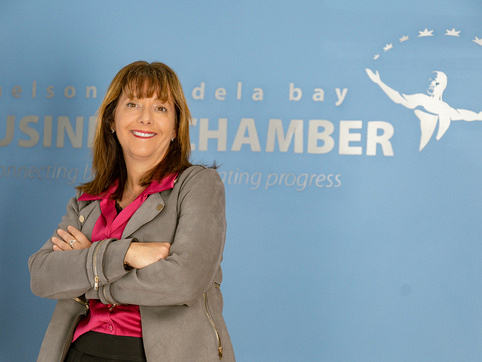
Denise van Huyssteen is the Chief Executive Officer of the Nelson Mandela Bay Business Chamber.
#ResurgingTheBay #BayOfOpportunity #MadeInTheBay