

Whether going by the Scout motto of “Be Prepared” or the mantra “failing to plan is planning to fail”, the notion of planning and preparedness is nowhere more relevant than when disaster strikes.
Whether weather-related or human-caused, the costs can be enormous: loss of lives, damage to properties and public facilities, loss of crops and livestock, damage to power lines, substations, water and sewage networks, bridges, roads and railways.
For business, the costs come not only in the prospects of injuries or loss of life and damage to premises and equipment, but also longer-term impact of revenue losses due to production and delivery delays or not being able to open the doors for trade.
Key to minimising impacts for people and businesses is planning and preparedness, including preventative maintenance of buildings and infrastructure, identifying and assessing threats and risks, and planning mitigation measures and response actions.
Given the diverse role players involved in infrastructure maintenance, in mitigating risk, and in preparation and emergency response, the planning and on-the-ground action and communication during a disaster needs to be collaborative and coordinated.
By being pro-active, we can eliminate or reduce the impact on business operations. The goal is for businesses to either continue uninterrupted or that the recovery to operation is as quick as possible, even if it is under abnormal or emergency conditions.
Severe flooding in the Bay in June last year, with particularly devastating impact in Kariega, highlighted the urgent need to strengthen disaster preparedness and response.
The Business Chamber established a Disaster Management Task Team of engineers, business representatives and experts in risk, disaster management and emergency response, working to assess and prioritise risks, identify gaps in preparedness, and develop practical strategies to reduce vulnerabilities.
The task team guides the Chamber’s “action arm” Risk Management Desk, launched in May this year with partners Hollard, Santam and Simah, and which is now actively mapping risks to support data-driven decision making, and building partnerships with organisations that can help implement risk mitigation measures, contributing to a safer and more resilient metro.
Key priorities include taking action to reduce the impact of weather-related disasters, particularly by addressing known risks - illegal dumping that blocks drains (there are over 1200 known sites in the metro), clearing alien vegetation that blocks waterways and heightens fire risks, clearing stormwater drains and canals, and improving infrastructure maintenance.
Actions on managing fire risks have included mapping alien vegetation and supporting clearing projects, working with non-profit Supporting Fire Services to assess gaps in local fire response capacity, while in 2026 we will be looking at rehabilitation of fire hydrants and training for the NMBM fire department in response to electric vehicle fires.
The Desk is also driving increased awareness of risks through education and insight sessions to guide business on assessing and mitigating risks related to natural disasters, cyber threats, hijackings and kidnappings, riots, and hazardous material spills.
Crisis communication – among businesses as well as between business and disaster management responders – was also identified as a point for improvement and the Chamber’s geographic cluster WhatsApp groups was identified as an ideal method to communicate with disaster response.
When the metro experienced flooding again in June this year, our Risk Management Desk’s participation in the metro’s Joint Operations Centre enabled us to contribute to real-time decision-making on actions needed in the hardest-hit areas, by channelling input from businesses impacted and at risk directly to the metro’s disaster response teams and in turn sharing up-to-the-minute information with Chamber members.
This kind of real-time information ahead of or during an extreme weather event or other disaster enables businesses to make decisions such as whether to continue with operations or shut down to protect the safety of employees and property. Many manufacturing operations need hours to safely end processes, so information to support these decisions needs to be both swift and accurate.
The Desk has also been included as a member of the advisory forum to the municipality’s Disaster Management Centre, again enabling direct input on the needs of business, and how business can participate in mitigating risks and supporting emergency response.
Working with the metro, substantial progress is being made on clearing and rehabilitating the De Mist and Kat stormwater canals, problem drains and ocean outfalls.
Five sewage pump stations have been adopted by business recently, providing security to guard against vandalism.
With support from Hollard, 17 local young people from the Youth Employment Service programme have been employed as interns with the Friends of Van Stadens, Zwartkops Conservancy and the Sustainable Seas Trust, where they are gaining valuable work experience and making an impact on those organisations’ work in public awareness, eco-tourism, litter clearing and alien vegetation control.
The excellent collaboration we have achieved thus far with the municipality’s disaster management centre and emergency services, as well as officials in areas including public health, waste management and stormwater, along with civil society, emergency response organisations, and Chamber member businesses, is already making an impact in strengthening infrastructure, awareness and communication.
Together, we can build a safer metro, more resilient to risks, disasters and climate change impacts.
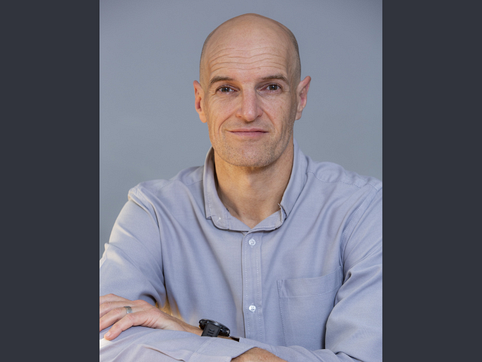
Nick Chapman is Plant Engineer for Volkswagen Group Africa and chair of the Nelson Mandela Bay Business Chamber’s Disaster Management Task Team.