

One of the most powerful tools that government has in its hands to strengthen the country’s manufacturing base and support job creation is the simple fact of its purchasing power.
National government and the provinces spent over R930 billion on goods and services in 2021/22, in 2.9 million transactions with over 76 000 suppliers, according to a recent assessment by the Organisation for Economic Co-operation and Development (OECD) in co-operation with National Treasury.
That sum is likely greater by now.
The key question is, where is government buying vehicles for its fleets, pharmaceuticals and medical supplies for public health facilities, worker uniforms and safety shoes, construction materials for building projects, chemicals, furniture, stationery, food supplies, professional services?
While existing public procurement regulations provide for preference to “local” supply, the draft new public procurement regulations proposed by National Treasury present an opportunity to give better substance and meaning to what this means in practice.
The draft regulations were published to give effect to the reforms under the new Public Procurement Act, which has been enacted but not yet implemented. The Act aims to establish a unified system of procurement across all spheres of government, with greater transparency, accountability, efficiency and cost-effectiveness, and safeguards against inflated costs and corruption.
There is no argument that these are welcome and necessary reforms.
However, there is also a significant opportunity for government to align its procurement practices with goals of industrial renewal, investment attraction and job creation, while also delivering better public services.
These objectives are complementary and mutually-reinforcing, particularly when public procurement is understood as far more than government buying goods and services.
Every rand of public expenditure should deliver value to citizens while also strengthening South Africa's economy.
For example, rights to education and health are guaranteed in our Constitution and the great majority of South Africans are reliant on public schools and public health services.
Government’s choices of suppliers of textbooks, desks, medicines and technology for these services are thus not only about price, but also about what delivers the greatest value for citizens beyond an individual school or clinic and into the wider economy.
The inclusion of “value for money” in the draft regulations, as meaning not only the cheapest price, is a positive step.
The value of public procurement should not be assessed solely on the lowest acquisition cost, but on the broader economic returns it generates through impact on local production, supplier development, innovation, skills development and sustainable employment, as well as tax revenue.
Public procurement also impacts beyond a single supplier, with a multiplier effect on up- and down-stream value chains, and this should also be taken into account when determining the overall economic value of a procurement decision.
Simply procuring “cheaper” goods from businesses who may be locally owned but are sourcing and importing their goods from other countries, does not serve South Africa’s best interests in terms of creating much needed local jobs and stimulating economic growth.
Deploying public procurement as a means to achieving economic transformation and inclusion is part of what government should be doing to reverse inequality, but this should go beyond percentages of ownership to genuine local content.
In addition to ownership requirements, procurement criteria should also recognise local manufacturing capabilities, local direct and indirect jobs created, value addition, innovation, technology transfer and long-term industrial competitiveness.
Public procurement can also play a key role in optimising utilisation of local manufacturing capacity, resulting in reduced unit costs of products, improved efficiency and greater global competitiveness that supports exports.
Transformation remains fundamental to South Africa's future, and procurement should continue creating opportunities for small, medium and micro enterprises.
Sustainable transformation is achieved by developing businesses that are technically capable, financially resilient and globally competitive. Supporting supplier development, mentorship and strategic partnerships will ultimately deliver stronger, more sustainable businesses able to deliver – better outcomes for both government and the economy.
South African businesses have developed internationally competitive capability across diverse sectors. They have invested in advanced manufacturing technology, quality systems, regulatory compliance and skills development.
Public procurement should recognise and leverage these capabilities, which in turn provides demand certainty that supports long-term investments in capacity, skills development, automation and technology upgrades.
Doing so not only improves security of supply for the purchasing government department, from state owned entities through to municipalities but also strengthens local industries, protects employment and creates confidence for future investment.
Programmes by state owned enterprises, such as Eskom’s expansion of the energy transmission network and Transnet’s programme to upgrade rail and port infrastructure, are key examples of long-term public investments that can support private investment and rebuild domestic manufacturing.
Business supports reforms that strengthen transparency, accountability and value for money. These principles are essential to building public confidence and ensuring that public resources are managed responsibly.
The next step is to ensure that procurement policy also delivers measurable economic outcomes of domestic value addition, employment supported, skills development, supplier development, security of supply and lifecycle cost.
For Nelson Mandela Bay, this discussion is particularly relevant. Our economy is underpinned by manufacturing – including automotive, pharmaceuticals, agro-processing – along with logistics and an extensive network of supporting industries.
Decisions taken around procurement influence the sustainability of thousands of jobs across our region. They directly affect our ability to compete, grow and create opportunities for future generations.
Public procurement must be recognised not only as a governance and compliance function, but as a strategic investment in South Africa's future..
Every government procurement decision should strengthen competitiveness, encourage innovation, support capable local businesses, generate local jobs and contribute to long-term economic resilience.
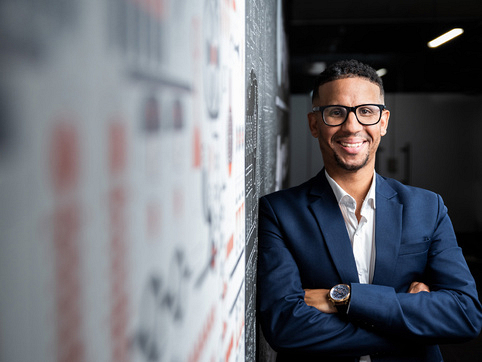
Branson Bosman is Skills Lead on the Board of the Nelson Mandela Bay Business Chamber.