
Succession planning, talent attraction and employee retention are familiar corporate terms, but they are also important at the levels of cities and countries.
A strong economy starts with people and a community — a desirable place to live, work and play attracts talented, ambitious people who drive businesses as employees or entrepreneurs, who invest locally, and attract and build networks with other likeminded people.
Maintaining that momentum is the “succession planning” aspect, so that a place sustains its attractiveness to the next generation and in turn continues on a growth path as a destination of opportunity and investment.
The factors that attract talented people to a city, and encourage them to stay, are well known, and common sense — quality of education, for themselves and for their children; quality of life through elements such as nature, culture, social activities, and safety; travel connectivity, less time spent in traffic; ease of doing business, and internet connectivity, among them.
SA ranks halfway down the Global Talent Competitiveness Index, at 67 out of 134 countries, with the third-highest score for Sub-Saharan Africa after Mauritius and Botswana.
We have slid down almost 10 places since 2016, while China has risen by almost 10 and Indonesia by 20.
Cape Town is the top-rated city in Africa at 116, followed by Johannesburg at 123, out of 155 cities.
These are attractors of the graduates and young professionals that Nelson Mandela Bay has a long history of exporting to bigger centres with more diverse economic activity and opportunities.
Where does that leave our metro in the “war for talent”?
Nelson Mandela Bay has many of the talent-attracting elements such as quality education institutions, clean air and coastal quality of life, relatively uncongested traffic and manageable commuting times, airport connectivity, reliable internet and digital-savvy businesses.
Our challenges are not dissimilar to those in other metros — electricity, water, potholes, lack of infrastructure maintenance, political instability and so on.
A lot needs to be done to create a more business-friendly environment
.
On the positive side, we are seeing increasing collaboration and activism by business and civil society to work together and get the Bay working again, with a municipality willing to participate, accept private sector support and meet the needs of business, all with a focus on fixing problems and retaining the investment and jobs that we have.
And we are starting to see some vibrancy returning to the local economy, with news of investments and new opportunities. At the same time as we are addressing the metro’s challenges, we need to ensure that we have the people to work in and lead new businesses, who see the opportunities, who are keen to invest and keep driving positive change.
As a country we have ageing political and business leaders, and not enough young leaders stepping up, or being developed, to take up the reins and move us forward.
As leaders in business and civil society — many of whom left the Bay to build careers in bigger cities and then returned when more established or seeking better quality of life — we need to be deliberate in talent attraction and retention, and succession planning, not only in our own businesses but for the metro too.
We need to help build the next generation of leaders who have strong networks, the ability to understand and engage across diverse sectors, and the interest in collaborating to drive solutions to our socioeconomic challenges beyond the interests of individual businesses.
Those are qualities that will enable them to lead businesses and lead in organisations such as the business chamber, professional bodies, civil society, politics — the institutions that contribute to a dynamic, progressive, growth-orientated metro.
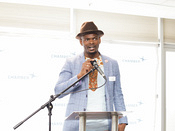
This is the thinking behind the Young Professionals Social Connect event held last week as part of the business chamber’s Empowerment Circle, which was a resounding success.
We had a vibrant session on Friday and what an amazing inspirational journey Liesel Greyvenstein of Greyvenstein Attorneys shared.
The young professionals were engaged and you could not hear a pin drop at how attentive they were.
With the chamber, we want to create a platform where the young professionals of the metro can engage and grow their business and professional circles, learn from and support each other — creating the networks that will grow with them as they grow in their careers.
We believe it is important to encourage networking across the boundaries of professions or sectors, developing a big picture understanding of the economy and opportunities, and sparking innovation and problem-solving.
By experiencing the natural energy that arises from connecting with like-minded people, passionate about change and committed to Nelson Mandela Bay, we believe we can contribute to retaining and supporting the talent the metro needs to succeed.
There has already been great interest in the connect circle, both from young professionals and corporate leaders, and while FNB has hosted the first event, we don’t wish to “own” the concept.
It needs to be a platform hosted and supported by diverse businesses with an interest in growing the Bay’s next generation of leaders.
Ultimately, we hope the platform is so successful at being a catalyst for strong networks, that there is no longer a need for it.