

Platinum is a critical mineral in the global energy transition, for its use in electrolysers and fuel cells for new energy vehicles, and South Africa holds over 80% of the world’s platinum-group mineral reserves and is by far the world’s largest platinum producer.
This should be good news – and it can be, if SA starts to put the right moves into action, urgently.
Currently, our platinum value chain is almost entirely dedicated to production of catalytic converters, of which we are one of the world’s largest manufacturers and exporters, but global demand is declining as electric vehicles do not require them.
This has substantial impacts through our platinum value chain, from mining through to manufacturing, exports of both raw materials and finished products, impacting on investment, foreign exchange earnings, and employment.
South Africa is one of the world’s largest producers of catalytic converters, and these account for about a third of the value of our automotive component exports, at R19,2 billion last year – but the volumes and value have been steadily declining since reaching R35 billion in 2021.
Local catalytic converter manufacturers account for a substantial portion of the estimated 81 000 jobs in component manufacturing, with a 4x employment multiplier in their supply chains – but the sector is under significant strain due to the shift to new energy vehicles (NEVs) and we are seeing downscaling, plant closures and job losses.
At the start point of this value chain, SA holds over 80% of the world’s reserves of platinum-group metals (PGMs), primarily platinum, along with palladium and rhodium, and accounts for 70% of global output. We are by far the world’s largest platinum producer, producing 120 tons a year with second-largest Russia trailing far behind at 23t/yr.
However, our local sales and beneficiation are small – only about 10% of local mining output is sold and beneficiated locally, and 95% of that goes into catalytic converter production.
The picture has changed dramatically in the past two to three years. From all-time profit highs for the PGM miners in 2022 as auto manufacturers pushed demand and metals prices reached record levels, to tumbling prices in 2023, miners recording substantial revenue losses and substantial drops in their share prices.
One mining CEO described it as the PGM sector’s “worst crisis in three decades”.
Direct employment in PGM mining, at 182 000 people in 2023, saw job losses in the 1000s last year (3 700 at Amplats alone), continuing into this year. Clearly, this will have a knock-on effect through the mining supply and value chain.
It is critical that South Africa now focuses on “the next big thing” in engine and battery technologies (we are still talking about research in lithium batteries, while the rest of the world is already moving away from them).
Hydrogen, and green hydrogen, key to hydrolyser fuel cells and hydrogen combustion engines, present hope for SA’s PGM mining and auto component value chains.
These technologies are emerging as an alternative or addition to EVs in achieving emissions-free transport, in passenger vehicles and particularly in emissions-heavy, long-distance transport – trucks, trains, ships.
There is also the option of green ammonia, a means of storage of green hydrogen, for use in emission-free internal combustion engines.
In this regard, Nelson Mandela is highly well-placed to play a pivotal role, with planning advanced for development of the R109 billion Hive Hydrogen green ammonia plant in the Coega SEZ.
Although we are not yet seeing much in the line of hydrogen-powered cars on global roads, several auto manufacturers are pursuing the technology alongside EVs and hybrids, with BMW global chair Oliver Zipse having said: “Hydrogen is the missing piece in the jigsaw when it comes to emission-free mobility.”
Adoption of hydrogen fuel cell technology also offers hope to catalytic converter manufacturers, which have the technology in place to switch to manufacturing of hydrolysers and fuel cells.
There have been numerous summits and workshops, masterplans and roadmaps have been developed around green hydrogen, and government’s view is that our country is poised to take advantage of this opportunity in the transition to a low carbon economy.
We have spoken for decades about the need to deepen local beneficiation of our vast mineral resources.
What is needed now is implementation.
We need much closer integration of the diverse strands of policy around minerals beneficiation, transitioning to NEVs (local manufacturing as well as infrastructure for local adoption), automotive industry development and incentives, R&D and technology development, renewable energy transition, as well as trade policies.
We can no longer afford to delay, or we risk being left behind – again.
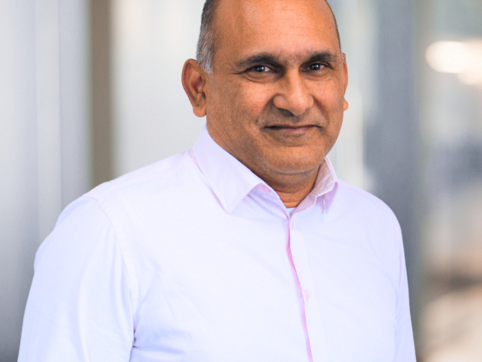
Kelvin Naidoo is Manufacturing and Technical Director of Auto-X, President of the Nelson Mandela Bay Business Chamber and Lead of the Chamber’s Local Economy Reinvention Think Tank.