

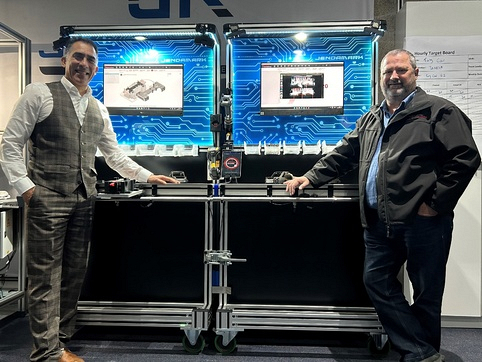
Embedding the required skills in academic institutions in the Metro from primary to tertiary level is a key priority for the Nelson Mandela Bay Business Chamber’s Local Economy Reinvention Think Tank, as it works towards repositioning the local economy to be globally competitive amidst a rapidly changing economic landscape.
Nick Marriott, the Think Tank’s strategic programmes officer, says the Think Tank recognises the importance of fostering educational programmes that align with industry demands and future economic trends, including equipping local students with the skills needed to thrive in a dynamic global market.
“By integrating these critical skills into higher education, the Think Tank seeks to ensure that graduates are well-prepared to contribute effectively to the local economy and support its transformation on an international scale. More importantly, we want these skills to be retained in the Metro to ensure that we have a strong pool of candidates who can sustain the local industry in next years to come. In the short term, we will be conducting a comprehensive skills and resource audit to identify current and future skills gaps in the local industry,” says Marriott.
The Think Tank has seven work streams focusing on diversifying the local manufacturing industries, capitalising on global gaps, shift the focus from automobile to “altermotive” mobility, strengthen the industry’s flexibility and resilience, utilise Climate Change as an opportunity, retain and grow engineering talent, leverage natural resources, get the city working and to work towards embedding the Nelson Mandela Bay ports and Rail Corridor in the government’s national strategy.
Marriott further elaborates that some of the key actions underway include the establishment of strategic partnerships with various potential partners, securing funding, conducting briefings and brainstorming sessions to find synergies between the groups.
As such, a comprehensive skills audit is planned to identify current and future skills gaps in the local industry. This aligns with the Think Tank’s overall strategy of building an agile, innovative and sustainable economy that is supported by a robust and adaptive workforce capable of meeting the demands of a globalised economy.
“There is unanimity amongst the work stream leads and various stakeholders we have engaged that the projects we will be pursuing must make business sense and be sustainable in the long term. The plan is to set up six kick start projects under the work streams and implement three of these within a year. However, these projects are not intended to be in direct competition with existing manufacturing sectors. The intent is to create new opportunities to positively impact our local economy,” says Nick.
Key criteria for on-boarding projects within the Think Tank will be evaluated based on feasibility to ensure it is self-sustainable, contributes to carbon footprint reduction within the metro or areas close to the region, and addresses skills development to aid in future proofing.
Each project will involve local students in a skills transference process, preparing them for entrepreneurial ventures or roles in local companies where their skills can be effectively utilised. This approach ensures that the projects not only support the local economy, but also foster long-term sustainability and growth.
“The idea is that once the student has completed his tenure, he or she can either pursue an entrepreneurial journey or join a local company where his skills can be maximised cohesively and collaboratively,” concludes Marriott.
#BayOfOpportunity