

Nelson Mandela Bay’s peak tourism season is upon us – and we know from recent media reports and just by looking at the state of the metro around us, that our state of readiness is, at best, uneven.
There is a lot that is good about the Bay to give visitors an experience worth remembering and sharing through word of mouth and via social media platforms – beaches and coastal activities, wildlife and nature, outdoor adventure, great weather and scenery, culture and history, a vibrant foodie and dining scene, events, entertainment, shopping at malls and markets, and our friendly vibe and warm hospitality.
And it all comes in a compact city environment at great value-for-money and ease of access compared to other major centres and wildlife destinations.
The value of tourism goes far beyond social media likes and shares, and also beyond measurements of airport arrivals, bed-nights in hotels and Bed and Breakfast establishments, and bookings of restaurant tables, game drives or sea excursions.
Nationally, the travel and tourism sectors account for an estimated 1.6 million jobs (±10% of all employed people in South Africa), and about 8-9% of GDP.
The World Travel & Tourism Council estimates that employment in the tourism sector in South Africa has a x 2.5 multiplier effect, i.e. for every person directly employed in tourism, another 1.5 jobs are created in the supply chain by the tourism business’s purchases of goods and services.
This is likely a conservative figure, as there are a number of further impacts on employment – the spending by tourists themselves in diverse local businesses, as well as the spending of tourism-related employees in the local economy.
For every restaurant meal enjoyed, groceries and toiletries purchased at a supermarket, curios and souvenirs bought from local markets or street vendors, museum or gallery visited, excursion booked, shuttle or taxi taken – there is an impact of tourism. And tourists need pharmacies, doctors, haircuts, shoe repairs, replacement phone chargers, and all kinds of other daily necessities too.
Domestic tourists visiting friends and relatives, rather than staying in formal accommodation, accounted for just over half of the 1.2 million domestic visitors to the Bay in 2024. From fixing up the house ahead of the visitors’ arrival, to buying in additional groceries, to extra days of work for employees such as domestic workers, childminders and gardeners – there is an impact.
Leisure tourism is an important “marketing window” for the Bay, in terms of building positive perceptions and reputation that influence future business tourism, attracting conferences and events, and building an investment case.
Where we are let down, however, is that around the high points of what visitors love about the Bay, they register their dismay in visitor surveys by the metro at a lack of safety and security, vulnerability to crime, dirty and littered environments, decaying abandoned heritage buildings, poorly maintained public spaces and facilities, inadequate infrastructure, potholes and non-working streetlights and traffic lights – an overall impression of dilapidation, a lack of care.
While it is great that King’s, Humewood and Hobie beaches have Blue Flag status, and Bluewater Bay and Wells Estate have achieved pilot status, other beaches are plagued by water quality and safety concerns, litter and glass, and a lack of public toilets, showers and recreation facilities due to neglect and vandalism.
The same goes for public resorts and swimming pools, with only seven of the 21 pools managed by the metro expected to be open over this summer season. While limiting opening of public swimming pools due to water conservation concerns is understandable; allowing them to decay is unacceptable.
With its natural assets and track record of hosting major business and sporting events, the Bay has tremendous growth potential as a tourism destination.
In the past year alone, we have hosted major national and international events that have brought thousands of visitors, including G20 events, the NAACAM Show, SA Automotive Week, the Southern African Citrus Growers’ Association Summit, the Africa Bunkering convention, the Springboks versus Italy match, the SA Masters’ interprovincial hockey tournament, Ironman South Africa and African Championship, and the Africa Triathlon Championship.
A major new event next year is the Lifesaving World Championships in November, expected to attract 6 000 competitors and delegates, while Agbiz has decided to host its Congress here in June, and more cruise liners are set to visit our port.
The Business Chamber is gearing up for 2026 and beyond by rolling out a Green Tourism workstream as part of the work of our Local Economy Reinvention Think Tank, which is aimed at unlocking the metro’s natural assets as potential tourism opportunities to create new jobs.
Not intended to replace existing tourism promotion and development initiatives being undertaken around the metro, but rather to expand upon the work we are doing under Bay of Opportunity which is positioning the Bay as a great place to invest, trade, live and visit. The approach will be to identify and support practical interventions which can promote collaboration among the various role players to solve problems and to tackle areas of “low-hanging fruit” to create jobs. Existing platforms which we have at the Chamber to unlock some of this include our Trade and Investment, Entrepreneurship and Skills Development Desks; which are complemented by the vital work being done by the Chamber’s geographic clusters and task teams.
However, the most important ingredients required to attract visitors to the Bay is an environment which is safe, secure and clean, and where the infrastructure is maintained and bylaw enforcement takes place. The key role player in making this happen is the Municipality and we are hoping to see this coming through as part of concrete action plans which the Executive Mayor has committed to presenting to Council on the 30th of January 2026, as an outcome of the Cogta imposed Section 154 process.
While visionary, long-term thinking is vital, we believe the metro needs to focus on getting the basics right before contemplating costly monuments, towers or statues. These are not going to contribute to attracting tourists if the overall environment is dysfunctional; if residents and visitors can’t see that existing assets are in good condition, well-maintained, and accessible.
With fundamentals in place, tourists and business visitors are more likely to spread a positive message and return, and residents more likely to encourage their families, friends and business colleagues to visit.
We believe this is the logical route to growing the Bay’s market demand and reputation, in order to trigger investment by tourism and hospitality corporates and entrepreneurs in developing new tourist facilities, attractions and experiences.
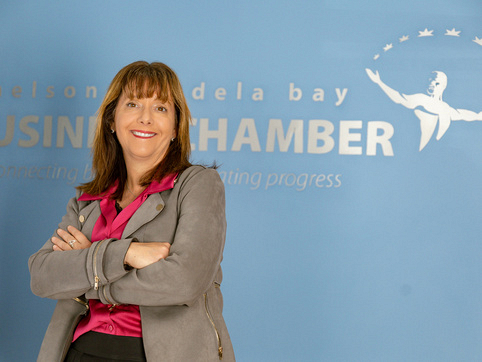
Denise van Huyssteen is Chief Executive Officer of the Nelson Mandela Bay Business Chamber.